

Every late fall, homeowners across Durham Region ask the same question: do clogged eavestroughs cause ice dams? If you had ice along the eaves, heavy icicles or a leak last winter, it is a fair thing to wonder. This guide gives you a straight answer about clogged eavestroughs and ice dams. You will also learn what a frozen downspout does, whether heat cables replace cleaning, and what to do before (or after) the freeze. For booking timing, see our last-call guide to eavestrough cleaning before freeze-up. For service details, visit our eavestrough cleaning page.
What is an ice dam?
An ice dam is a ridge of ice that forms along the lower edge of the roof, at the eaves. Melting snow above the ridge cannot drain past it. Instead, the water pools behind the ice. From there, it can back up under the shingles.
Here is how it usually happens. First, heat escaping from the house warms the roof. Next, snow on the roof melts from below, and the water runs down the slope. When it reaches the colder eave edge, it refreezes. The eaves hang out past the warm walls of the house, so they stay colder than the rest of the roof. Over time, that edge ice grows into a dam.
In other words, an ice dam starts on the roof, not in the eavestrough. That point matters for the next question, because it shapes what a clean-out can and cannot do.
Do clogged eavestroughs cause ice dams?
Short answer: not on their own. Roof heat and snowmelt are the usual root cause. However, clogged eavestroughs (or clogged gutters, as many people search) can make ice dams worse.
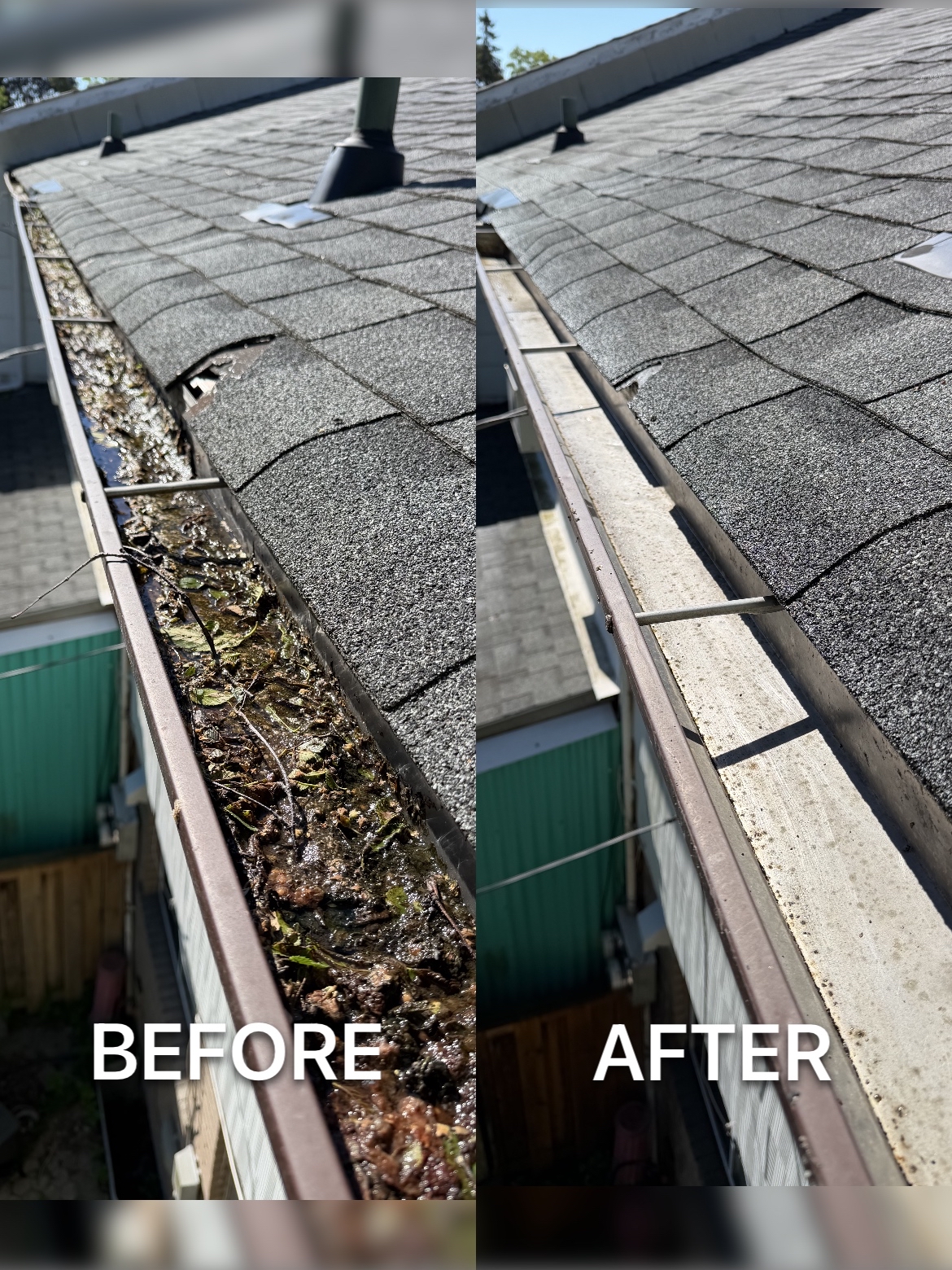
Here is why. Leaves, seeds and sludge hold water in the run. As the weather turns cold, that water freezes in place. Then, when snow melts on the roof, the meltwater has nowhere to go. As a result, ice builds at the roof edge and over the front of the eavestrough.
The effects add up over a winter:
- Heavier ice and bigger icicles along the eaves
- Extra stress on hangers and seams
- Overflow onto fascia, siding and walkways
- Water pooling at the foundation during a thaw
So, clogged eavestroughs and ice dams are linked, but the clog is usually the amplifier, not the source.
An honest note about ice dams that keep coming back
If ice dams come back every winter, even with clean eavestroughs, the root cause is likely heat loss through the roof. In that case, a roofer or an insulation and attic ventilation pro is the right call. Our work is cleaning. Roofing, insulation and ice on the roof are jobs for other trades. We would rather tell you that up front than oversell a clean-out.
What happens when a downspout freezes?
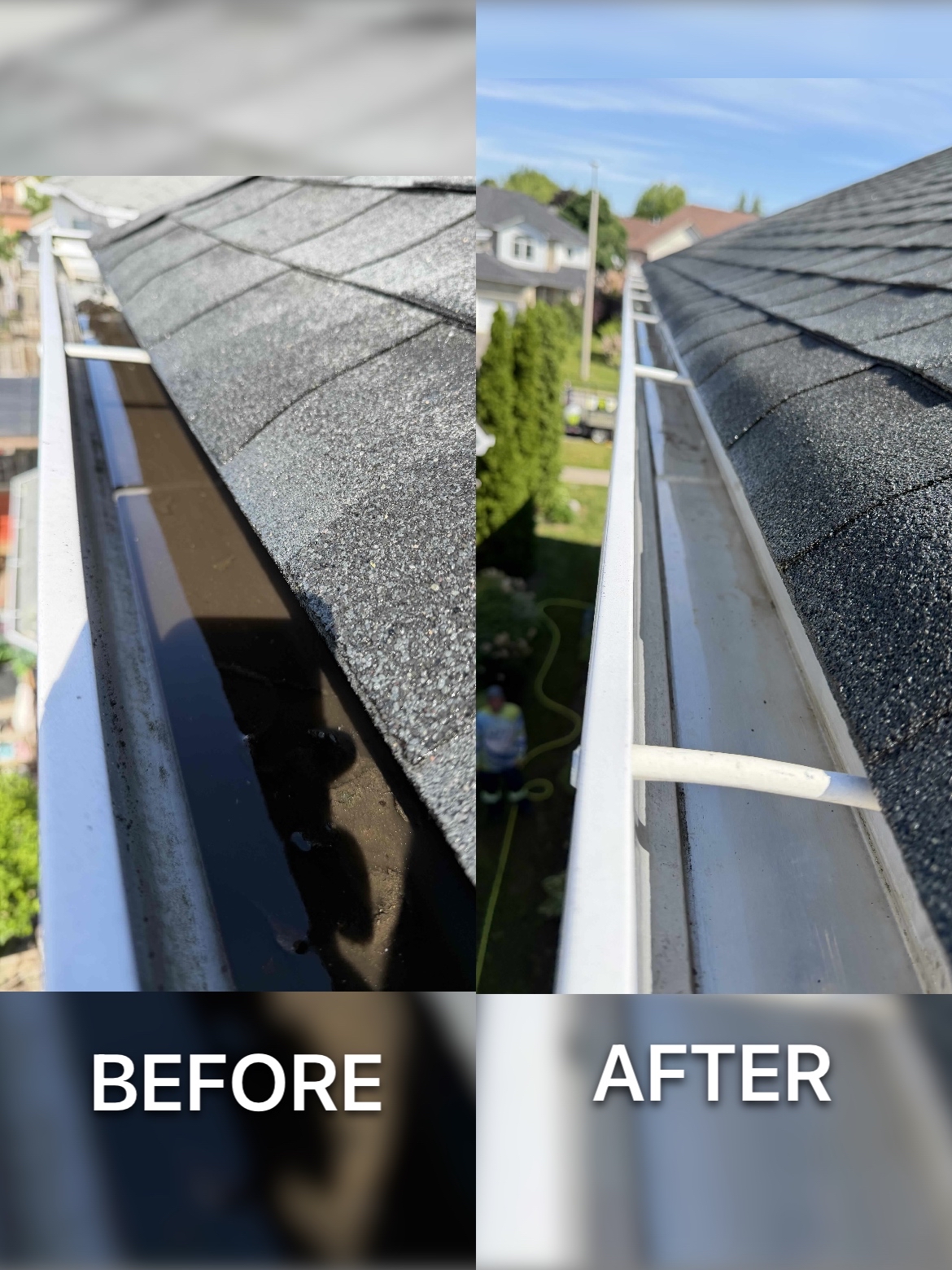
A downspout packed with debris, or a blocked elbow, holds water. When the cold sets in, that water freezes solid. Now the whole run backs up, and the eavestrough overflows along its length.
Where that water lands matters too. Water dumped at the wrong spot can freeze on walkways and driveways, which creates a slip risk for your family and visitors. During a thaw, it can also pool against the foundation.
A frozen downspout can also hide the problem. From the ground, everything may look fine. Then the first thaw arrives, and water spills over the front of the run instead of draining away.
Clogs found in fall often stay blocked into spring, too. If you already see water spilling over the edge when it rains, read about the signs of an overflowing eavestrough.
Do heat cables replace eavestrough cleaning?
No. Heat cables, sometimes called heat tape, are a separate product. Some homeowners use them to keep a channel open through the ice. However, they do not remove leaves, seeds or sludge. Debris left in the run still holds water and still blocks downspouts.
Whether heat cables make sense for your home is a question for you and the right trade. We do not sell or service them, and we do not put them up. Either way, your eavestroughs still need a proper clean-out and flush so water can reach the downspouts.
How to lower your risk before winter
You cannot control the weather. Still, you can control how well your eavestroughs drain. Use this short checklist:
- Have every run cleared by hand after most leaves have dropped
- Make sure every downspout is flushed and flowing
- Note loose hangers, sagging sections or leaks while someone is up there
- Keep downspout outlets pointed away from walkways and the foundation
- If ice dams keep coming back, talk to a roofer about attic heat and ventilation
For a wider look at seasonal upkeep, see our guide to preventative maintenance for your property.
A quick safety note: icy ladders and rooflines are dangerous. Leave winter roofline work to trained, insured crews.
Is it too late this year? Not always. If the weather still allows safe work and water can still flow for a flush, it is not too late to book. Otherwise, plan a spring clean to clear winter grit and seeds. Our last-call post explains the timing in more detail.
How DSS handles your eavestroughs
Booking with Dynamic Surface Solutions takes four simple steps:
- Request a quote. Call, text or send the form.
- Get a clear written scope, usually within 24 hours.
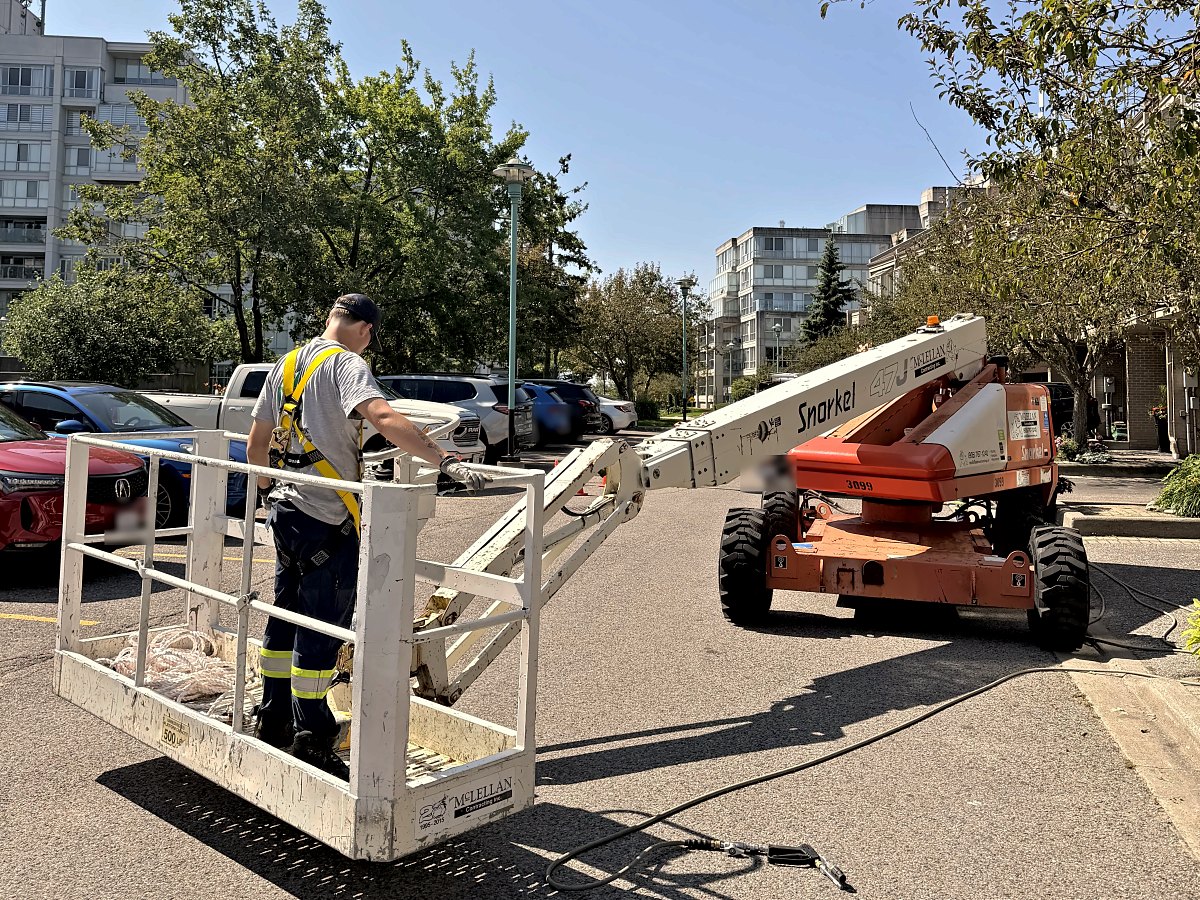
- Protected, professional service. We carry $5M liability insurance and WSIB coverage. Our crews are trained in Working at Heights, WHMIS, CPR and elevated work platforms. We are a registered Ontario business.
- A walkthrough with before-and-after photos so you can see the work for yourself.
Every eavestrough visit includes:
- A hand clean-out of every run
- A downspout flush and flow check
- Debris bagged and removed from your property
- A condition note on anything loose or leaking
- Optional eavestrough brightening on the same visit
For the full scope checklist, read what you are paying for in a professional eavestrough clean. You can also browse real results in our project gallery. Google reviews often mention crews that flush the downspouts and send photos when the job is done.
We serve Oshawa, Whitby, Brooklin, Ajax, Pickering, Courtice, Bowmanville, Newcastle, Port Perry, Clarington, Durham Region and the GTA. See our local pages for Oshawa, Whitby, Ajax, Pickering, Bowmanville, Brooklin, Clarington and Port Perry. Our hours are Monday to Friday, 7am to 7pm, and Saturday, 8am to 5pm.
Want your eavestroughs clear and flowing before winter sets in? Get a free, no-obligation quote with a clear written scope, usually within 24 hours. Call or text 905-431-4060 or request a quote online. Learn more about our eavestrough cleaning service.
FAQ: clogged eavestroughs and ice dams
Do clogged eavestroughs cause ice dams?
Not on their own. Ice dams mainly form when roof heat melts snow that refreezes at the colder eaves. Clogged eavestroughs make it worse: trapped water freezes in the run, so meltwater can’t drain, ice builds at the edge, and overflow hits fascia, siding and the foundation.
What happens if a downspout freezes?
A blocked downspout holds water that freezes solid, so the whole eavestrough backs up and overflows. Water can spill onto walkways and freeze, or pool at the foundation during a thaw. Flushing downspouts before freeze-up keeps them flowing through winter.
Do heat cables replace eavestrough cleaning?
No. Heat cables can help keep a channel open, but they don’t remove leaves, seeds or sludge. Debris left in the run still holds water and blocks downspouts, so eavestroughs still need a proper clean-out and flush.
How do I prevent ice dams on my eavestroughs?
Keep eavestroughs and downspouts clean and flowing so meltwater can drain, and point downspout outlets away from the house. If ice dams return every winter, have a roofer check attic insulation and ventilation, since roof heat is the usual root cause.
Are icicles on my eavestroughs a bad sign?
Often. Heavy icicles usually mean water is overflowing instead of draining through the downspouts, which can point to clogs or a blocked downspout. They add weight to hangers and can drip and refreeze on walkways below.
Want your eavestroughs clear and flowing before winter sets in? Get a free, no-obligation quote with a clear written scope, usually within 24 hours. Call or text 905-431-4060 or request a quote online. Learn more about our eavestrough cleaning service.